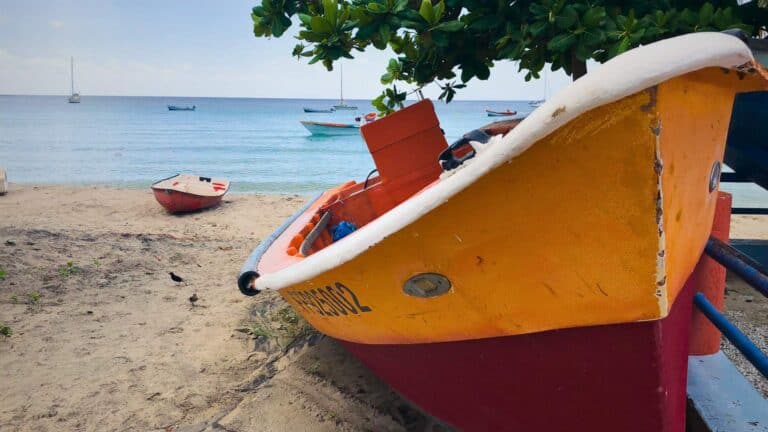
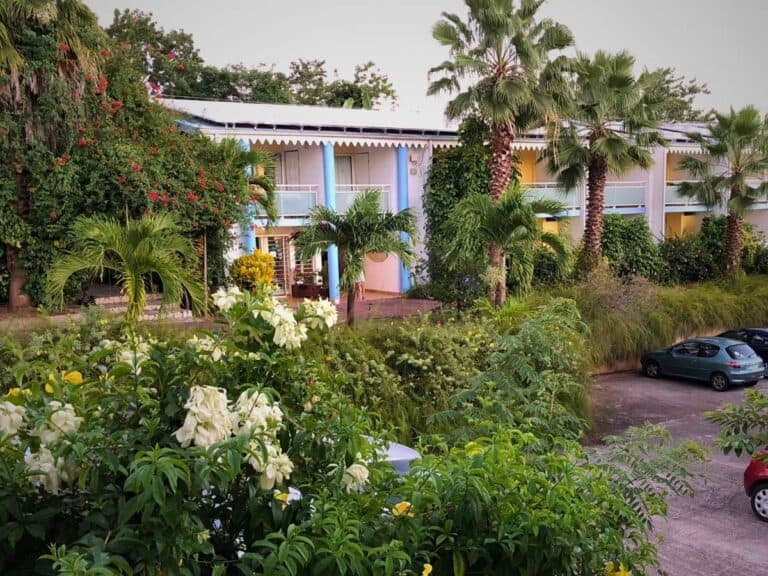
Martinique Travel Guide: Everything You Need to Plan Your Trip
Watching Pierce Brosnan whisk Rene Russo away to the French Caribbean island of Martinique in the sexy-as-hell 1999 remake of The Thomas Crown Affair started my obsession with the island. Those lush tropical rainforests, breathtaking white sand beaches and dramatic black sand beaches. It was all so gorgeous.
When we finally got to go almost 20 years later, I found Martinique was so much more than I ever imagined. I’m talking world-class French Creole cuisine, the finest rum in the Caribbean, and a rich cultural history. It’s safe to say that two trips to Martinique later and I’m still obsessed.
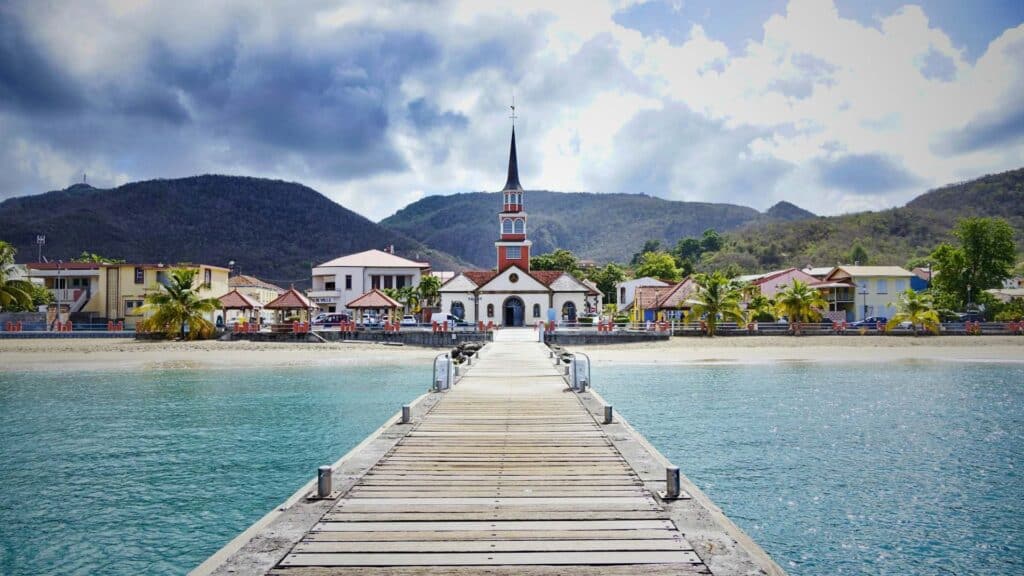
This Martinique travel guide covers everything you need to plan your trip where to stay, how to get there, what to do, and what to eat and drink. If you’ve been searching for good English language information about Martinique and coming up empty, you’re in the right place. We built this for you.
Disclaimer: This post may contain affiliate links. Please see our Disclosure Policy for details.
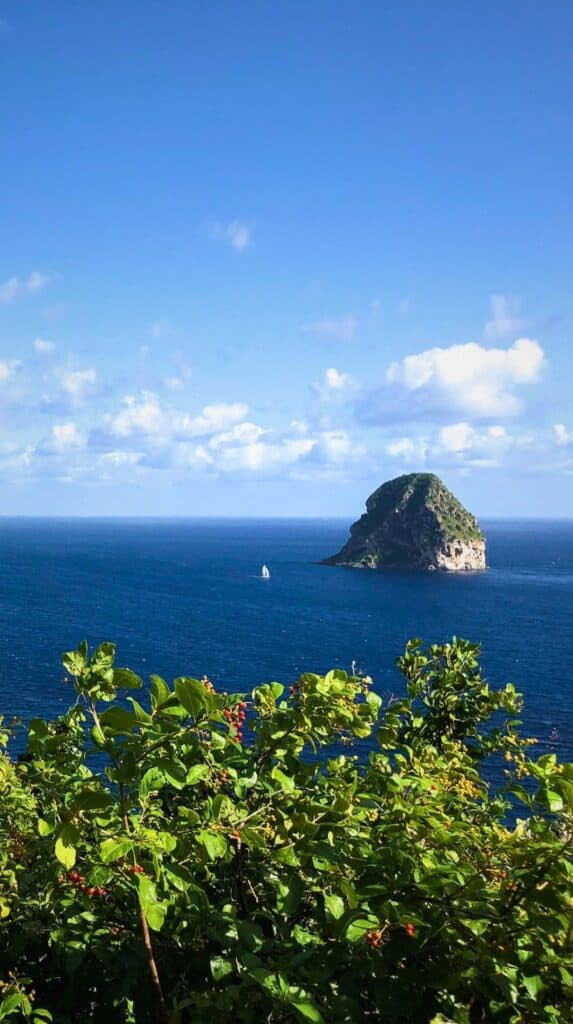
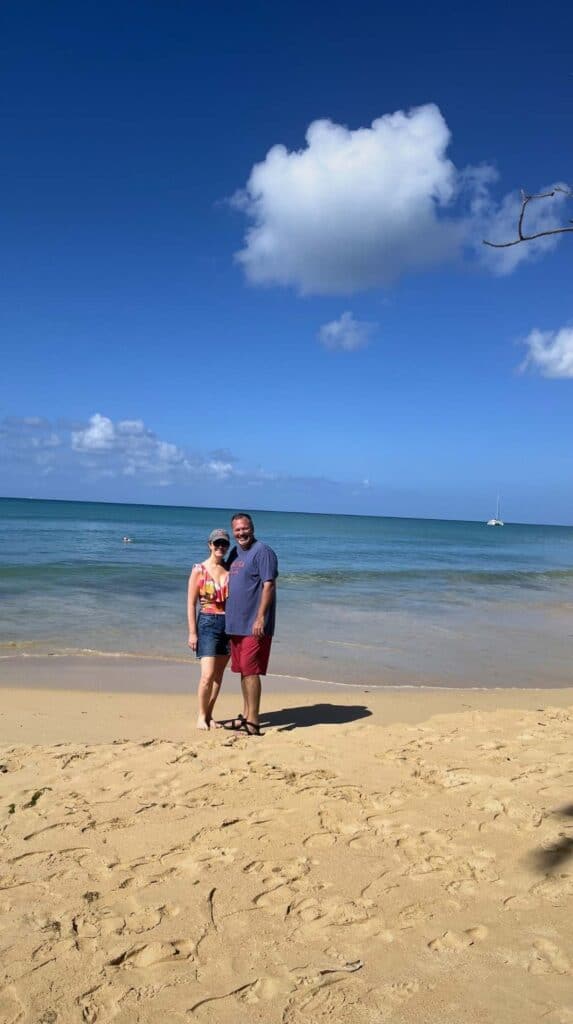
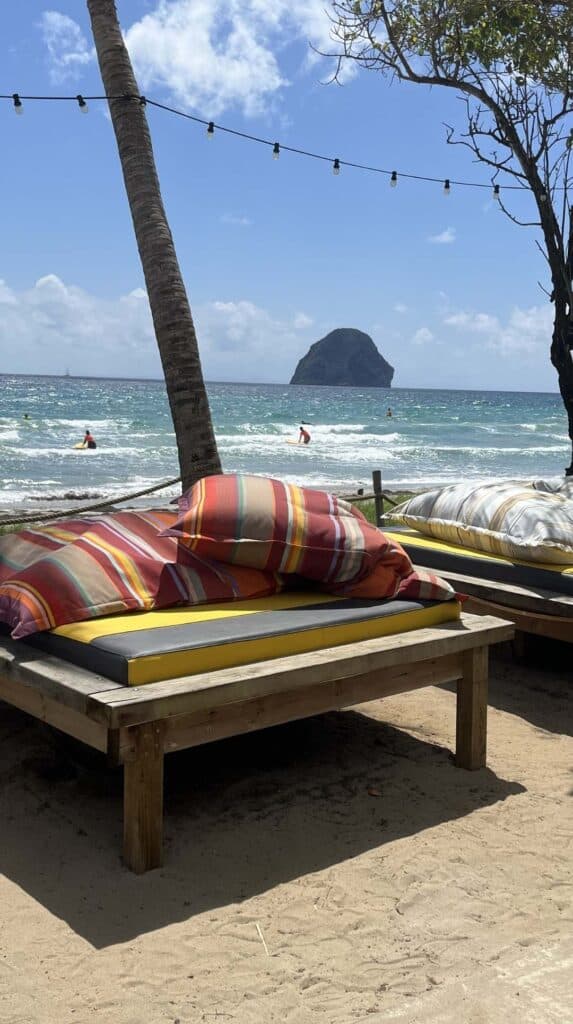
Planning a Trip to Martinique? A Quick Travel Guide
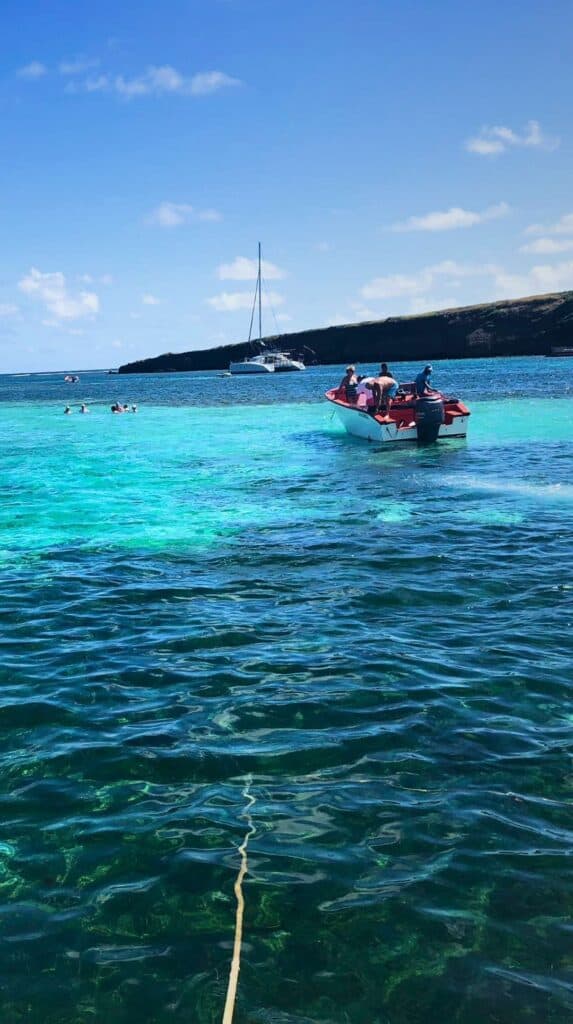
🏨 Where to Stay
$ Budget: Les Cayalines Résidence Hôtelière
$$$ Moderate: Hotel Bakoua
$$$$ All Inclusive: Club Med Les Boucaniers
$$$$ Luxury: Character House VRBO
$$$$ Luxury: La Régence VRBO
🦞 Where to Eat & Drink
Pastries: Boulangerie-Patisserie La Guerande
Lunch: Pam Snack Food Truck, Chill, Gang of Pizza
Dinner: O’Calebassier, Le Petibonum, Caribbean Food
☀️ What to Do in Martinique
🥃 Tour a Distillery
🏝️ Relax on the beach
🇫🇷 Take a guided tour of the island
🐢 Go snorkeling with sea turtles
Where is Martinique Located?
Martinique is in the French West Indies, way down in the southern Caribbean between Saint Lucia and Dominica. The island is roughly the size of New York City at 436 square miles, just 50 miles long and 22 miles wide.
Can Americans Visit Martinique?
Yes, US citizens can visit Martinique with just a valid passport. You won’t need a visa to stay up to 90 days.
One thing to check before you book: your passport needs to be valid for at least six months beyond your planned departure date from Martinique. If it’s cutting close, renew it first.
🌺 Martinique is not for Tourists. Martinique is for Travelers.
I didn’t understand this quote until I learned that Martinique earns less than 5% of its revenue from tourism. For context, some Caribbean islands earn up to 80% of their entire GDP from tourists.
What does that mean for you as a traveler? Martinique doesn’t depend on tourist dollars to survive, so it has never needed to reshape itself around visitor expectations.
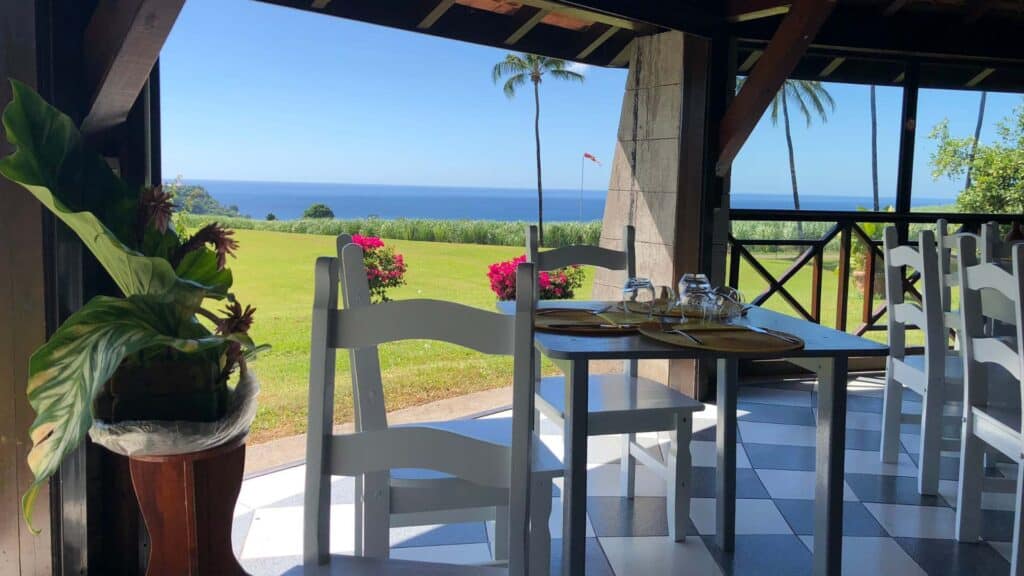
What you get are fresh baguettes from a real French bakery, rum distilleries around every corner, and French menus served at open air restaurants right on the beach.
In other words, Martinique is authentically Caribbean and authentically French.
Best Time to Visit Martinique
There’s really not a bad time to visit Martinique. Steady trade winds blow across the island all year long, keeping temps in the 80s. But there are some things to consider.
December through April is high season. It’s dry. It’s beautiful, and it’s crowded. Prices are higher and hotels book up, especially around Carnival in February.
June through October is rainy season and hurricane season runs through the Caribbean at the same time. So, while prices are cheaper you may have to deal with more rain.
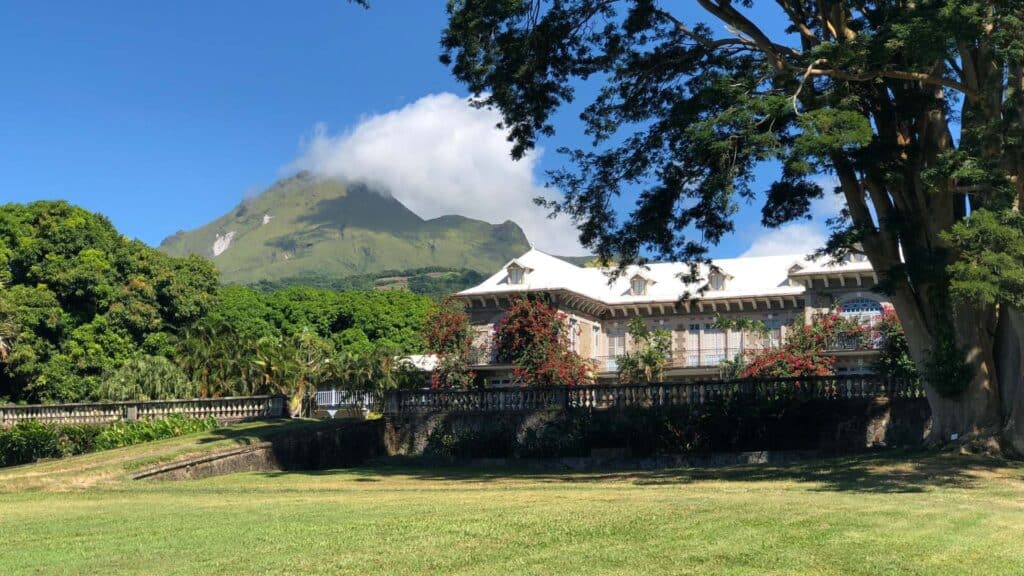
However, that doesn’t mean every day will be a washout. The sun shines most days even during rainy season, so if you’re willing to take the risk you can save some cash. Many hotels and restaurants close during this time since tourism is slower.
If you want the best weather with fewer crowds and lower rates, May or November are shoulder seasons.
|
Month |
Avg .High °F |
Avg. Low °F |
Avg. Precipitation |
|---|---|---|---|
|
January |
84° (29°C) |
72° (22°C) |
2.8″ |
|
February |
84° (29°C) |
72° (22°C) |
2.5″ |
|
March |
85° (29°C) |
72° (22°C) |
2.8″ |
|
April |
86° (30°C) |
73° (23°C) |
4.1″ |
|
May |
87° (31°C) |
74° (23°C) |
5.0″ |
|
June |
87° (31°C) |
75° (24°C) |
6.1″ |
|
July |
88° (31°C) |
75° (24°C) |
7.5″ |
|
August |
88° (31°C) |
75° (24°C) |
8.3″ |
|
September |
88° (31°C) |
75° (24°C) |
7.9″ |
|
October |
87° (31°C) |
75° (24°C) |
9.1″ |
|
November |
86° (30°C) |
74° (23°C) |
7.9″ |
|
December |
85° (29°C) |
74° (23°C) |
5.2″ |
We love traveling during shoulder season for the lower prices and fewer people. Our first trip to Martinique was the week of Thanksgiving. The weather was perfect all week. Our second trip was in February, just after Carnival, and we had a couple of storms roll through during the week.
Festival Season in Martinique
Carnival season starts in January and runs through mid-February. Similar to Mardi Gras in New Orleans, Martinique has days of island-wide parades, music, and street celebrations in the days before Lent. If that’s your thing, book early because hotels fill up fast.
Right on Carnival’s heels, usually in late February, is the Schoelcher International Nautical Week. For four days, around 150 Olympic-class racing sailboats compete in multiple heats just off the beach near Schoelcher, close enough to shore that you can follow every race from the sand while sipping on Ti Punch.
What Language is Spoken in Martinique?
French is the official language, and it’s what you’ll hear in restaurants, shops, and hotels when talking to locals. But, the conversations you overhear on the streets, in the markets, and on the beaches will likely be Martinican Creole. This blended language is rooted in French but shaped by African, English, Spanish, and indigenous influences.
What you won’t hear spoken much is English. Unlike mainland France, where you’ll find English spoken in tourist areas, Martinique’s visitors are overwhelmingly French. So, English just isn’t needed.
If you come prepared with some basic French phrases and Google Translate, you’ll be fine navigating the island. Our first trip to Martinique definitely tested my college French, but with new translation tools, our second trip was much easier.
💬 Say bonjour, maybe make a friend
We passed a man in Saint-Pierre who looked like he wanted nothing to do with us. I said bonjour anyway. He looked up, surprised, and returned my hello. He broke into a big smile and he called after us as we walked away, “Ayez une bonne vacance”. Have a good holiday.
Traveler Phrases in French and Martinican Creole
Speak a few words of French and the locals will understand. But if you pick up even one or two Creole words, you might make some new friends.
|
English |
French |
Martinican Creole |
|---|---|---|
|
Hello |
Bonjour (bone-ZHOOR) |
Bonjou (bone-ZHOO) |
|
Good Evening |
Bonsoir( bone-SWAHR) |
Bonswè (bone-SWEH) |
|
Please |
S’il vous plaît (seel-voo-PLAY) |
Souplé (soo-PLAY) |
|
Thank you |
Merci (mair-SEE) |
Mèsi (MEH-see) |
|
No problem |
De rien (duh-ree-EN) |
Pani pwoblem (pah-nee pwob-LEM) |
|
Let’s go |
Allons-y (ah-lon-ZEE) |
An nou alé (ahn-noo-ah-LAY) |
|
See you later |
À plus tard (ah-ploo-TAR) |
A pli ta (ah-plee-TAH) |
Cash, Cards, and Currency in Martinique
Martinique’s currency is the Euro and credit cards are widely accepted, but be sure to bring your Visa or Mastercard. We found that most places did not take American Experess.
You’ll want to have some cash for smaller local spots, roadside stands, and especially for tipping tour guides. Avoid private ATMs in convenience stores and tourist areas. They tend to charge high fees and the exchange rates are not good.
Instead, stick with bank owned ATMs. Look for BNP Paribas, Crédit Agricole, and Société Générale. When the ATM asks if you want the local bank to set the exchange rate, say no. Let your home bank do that. The rate will be better and you won’t be charged a fee.


How to Get to Martinique
Flying to Martinique
Aime Cesaire International Airport is located in Le Lamentin, just outside of Fort de France. While nonstop flights arrive from European cities daily, Americans have fewer choices for the direct route. The flight from Miami is about 3.5 hours, so plan for an extended travel day to include connections from your home airport.
Remember, the more flexible you can be with dates, the better chance you have of scoring a deal on your flight.
Cruise to Martinique
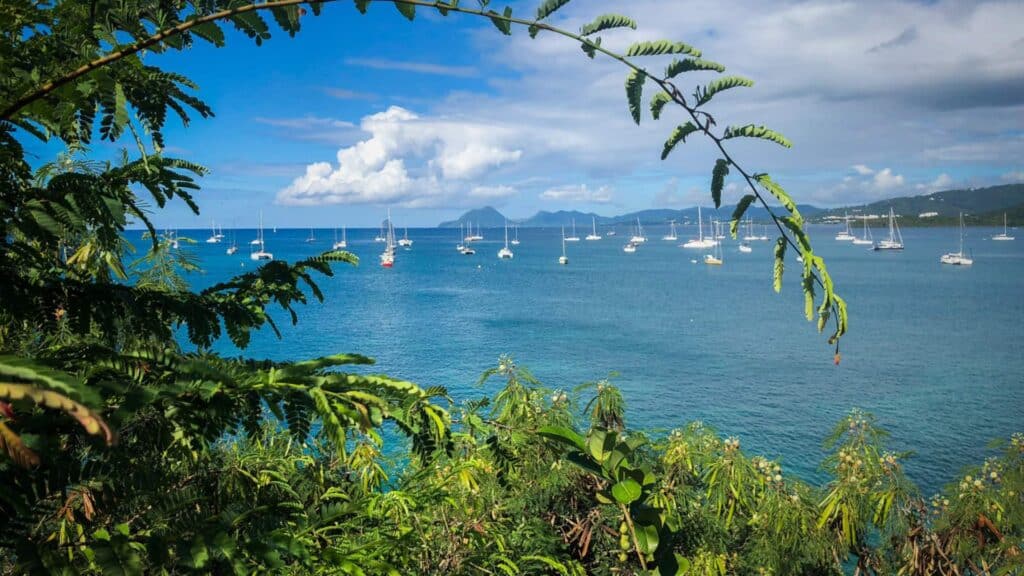
Several cruise lines offer stops in Martinique. The port located is in Fort de France. We can’t recommend enough taking a local tour of Martinique if you’re only in port for the day.
While historic Fort de France is definitely worth the stop, you really have to get out of the city to experience the island. The only person I’ve ever heard say they didn’t like Martinique stopped here on a cruise and never left the port.
Take a Ferry from Nearby Islands
If you’re island-hopping, you can fly into Guadeloupe or St. Lucia and take the ferry to Martinique. The crossing from St. Lucia is the shorter option at about 1.5 hours. Coming from Guadeloupe is closer to 4.5 to 5 hours, so not necessarily a quick trip. Both routes are operated by L’Express Des Iles.

Getting Around Martinique
To see the island, you need to rent a car. Uber and Lyft don’t operate here, and taxis are expensive. A few rides will cost you more than a weekly rental . The fare from the airport to Les Trois-Ilets alone runs around €50–60 before surcharges for evenings and weekends.
🚗 Since our last visit to Martinique a new rideshare option called Rhumz started operating. The app is available on iPhone and Android, but we haven’t used it personally so we can’t offer any advice or reviews.
Booking your car should be one of the first things you do. Most cars on the island are small European models and there are very few automatic transmissions or full size cars available. On our second trip, my dad ignored our advice and booked last minute. At 6’4″, he spent a week folding himself in and out of the smallest car I’ve ever seen.
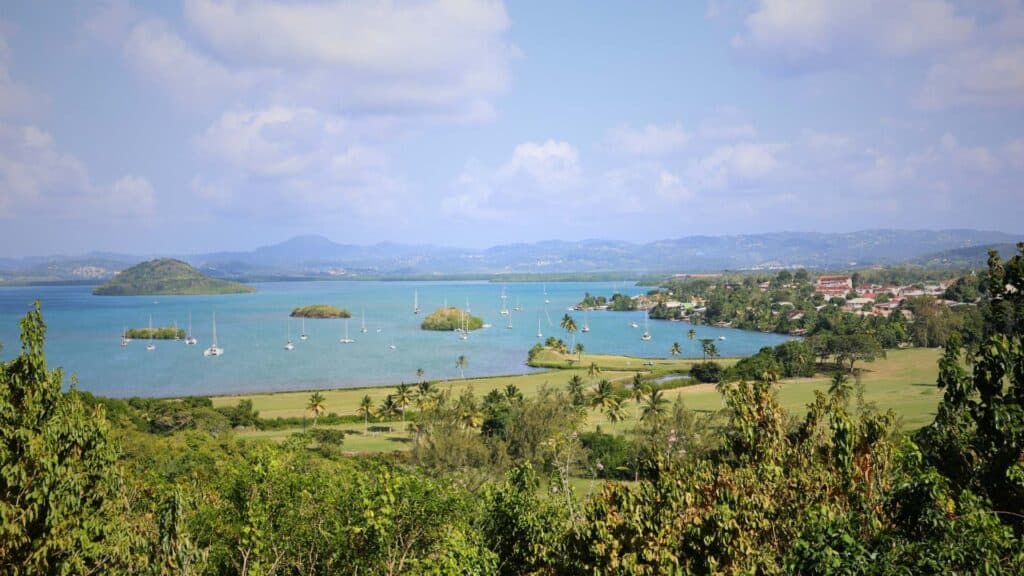
The French drive on the right side of the road and the signs are pretty easy to navigate. The only tricky spots are Fort de France which gets very congested at rush hour and the northern mountains. The roads up there are narrow and winding. Really winding. Chalk it up to the adventure.
⛴️ A local ferry runs between Les Trois-Ilets and Fort-de-France every 20–30 minutes. If you’re spending a day in the capital, skip the drive and take the boat. Parking in Fort-de-France is a headache you don’t need. One word of caution: give yourself plenty of time. The ferry runs on island time, which is not always according to the schedule.
Is Martinique Safe?
We explored the entire island on both of our visits and never once felt unsafe. The people are friendly, and when we asked for help or directions, nobody hesitated. Our experience wan’t isolated. The US State Department rates Martinique at Level 1, which is the safest rating possible.
The usual common sense applies. Petty theft happens around Fort-de-France and the cruise port, as it does in any busy city. Don’t leave valuables visible in your rental car, keep an eye on your things at crowded markets and beaches, and you’ll be fine.
Eating in Martinique: French Cuisine Meets Caribbean Flavor
Remember that Martinique is France… right smack dab in the middle of the Caribbean. And the food is exactly what you’d expect from that combination: incredible French cooking layered with Caribbean, African, and Creole flavors.
Many restaurants adjust their menu based on the day’s catch, so what’s on your plate at dinner was probably swimming in the ocean that morning. And then there are the bakeries. Real French bakeries, on a Caribbean island making fresh baguettes and pastries every single morning. Honestly, is there anything better than that?
Restaurants here run on French time. Lunch service runs roughly noon to 3pm, and dinner doesn’t start until 7pm. During high season you’ll definitely want to make reservations. The good restaurants fill up fast.
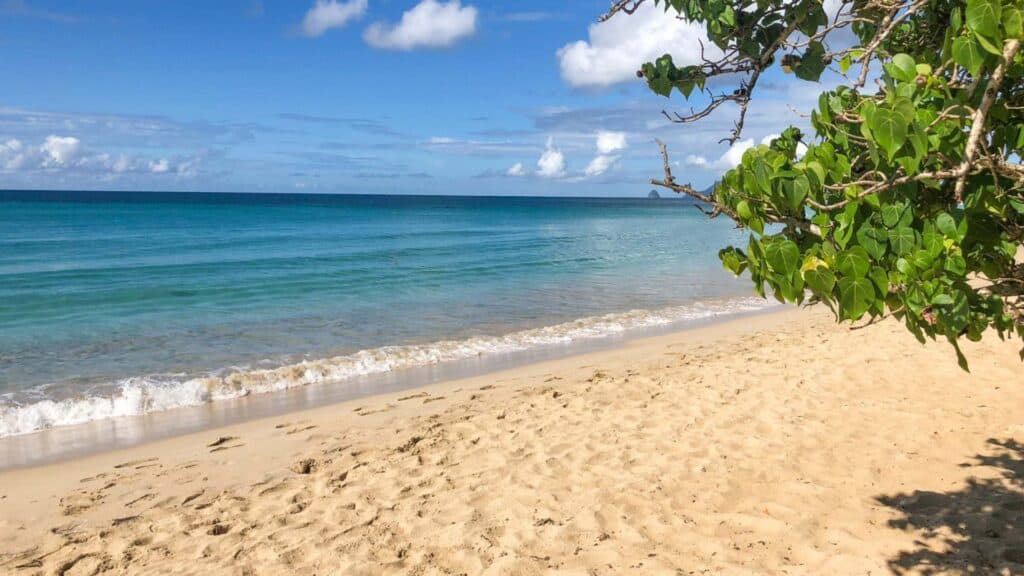
In typical Caribbean fashion, most of the restaurants are open air and many are located right on the beach. Not near the beach…on the beach. Tables are arranged on the sand, making for some amazing dinner views. On our first visit we had Thanksgiving dinner at Caribbean Food and watched the sunset as we enjoyed fresh langoustine, salad with fried goat cheese, and ribs that Jason still talks about.
🇫🇷 🍹 The French take mealtime seriously, and Martinique is no exception. Meals are to be enjoyed, not rushed through so servers will leave you alone to enjoy your food. Plan on dinners taking up to two hours.
Foods to Try in Martinique
Two things are considered the island’s official flavors and you’ll find them everywhere.
Accras de morue are salt cod fritters. You’ll find these crispy, savory fritters served as bar snacks, appetizers, and street food. Order them every single time they appear on a menu. You will not regret it. We learned how to make them at home.
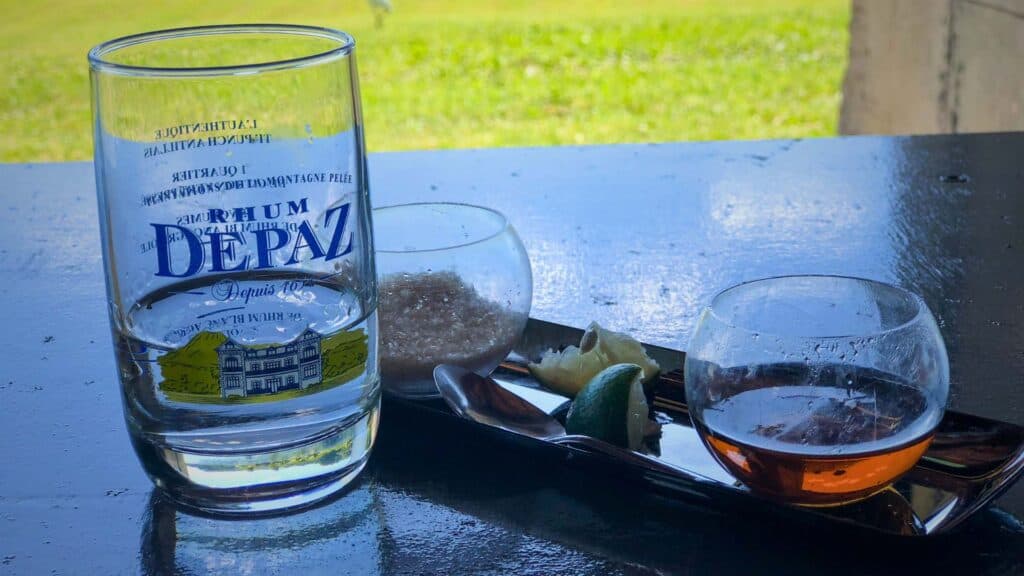
Ti Punch is the island’s official cocktail and Martinicans drink it from breakfast through dinner. This drink of rhum agricole, lime, and cane syrup is simple and delicious. We learned to replicate it at home as well.
Where We Ate in Martinique
These are some of our favorite places we ate in Martinique. There are well over 350 restaurants on the island and we haven’t had a bad meal yet.
Boulangerie La Guérande in Les Trois-îlets is everything you want from a French bakery. They serve sweet and savory options, fresh pastries, incredible sandwiches, and you can count on a line out the door every morning. Go early or go prepared to wait. It’s worth it either way.
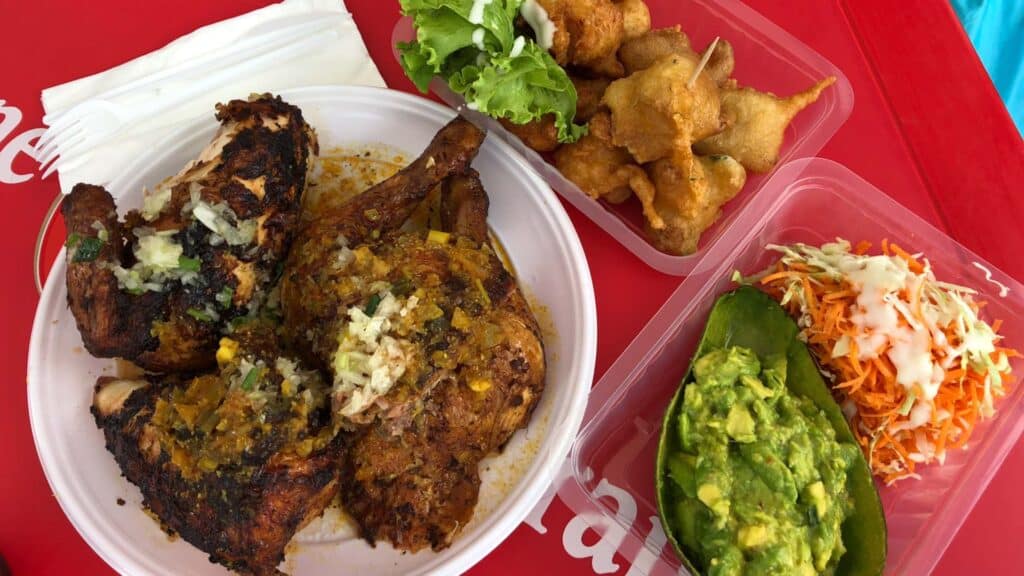
Pam Snack is a food truck on Diamant Beach specializing in poulet boucané, chicken marinated in Creole spices and smoked over sugarcane. It’s a specialty of the French West Indies and this is the place to try it.
Caribbean Food sits right on Gros Raisin beach in Sainte Luce. The seafood is exceptional. We loved it so much on our first trip that we came back on our second. The Thanksgiving dinner that sold us is described above.
Chill on Diamant Beach is a large open-air restaurant with something you don’t often see, living room areas on the beach. Think casual outdoor sofas and oversized chairs where you can eat, drink, or just sit with a Ti Punch and watch the water.
O Calebassier in Sainte Luce writes its menu on a chalkboard every day based on the day’s catch. The owner, a wonderful older woman from Senegal that I’m pretty sure had a crush on Jason, told us her secret ingredient is that she cooks with her heart. We ordered takeout after a day on the water and it was so good we went back the next night.
Gang of Pizza Stay with me on this one. It’s a pizza vending machine. An actual vending machine that bakes you a fresh piping hot pizza. You punch in your order, it cooks it, and spits it out in a box. We went to the one in Les Trois-Ilets not expecting much but the pizza was really good.
Le Petibonum is a famous local hangout right on the beach, known for its chef who has made short shorts something of his trademark. Dinner was delicious and the setting is exactly what you picture when you imagine eating on a Caribbean island.
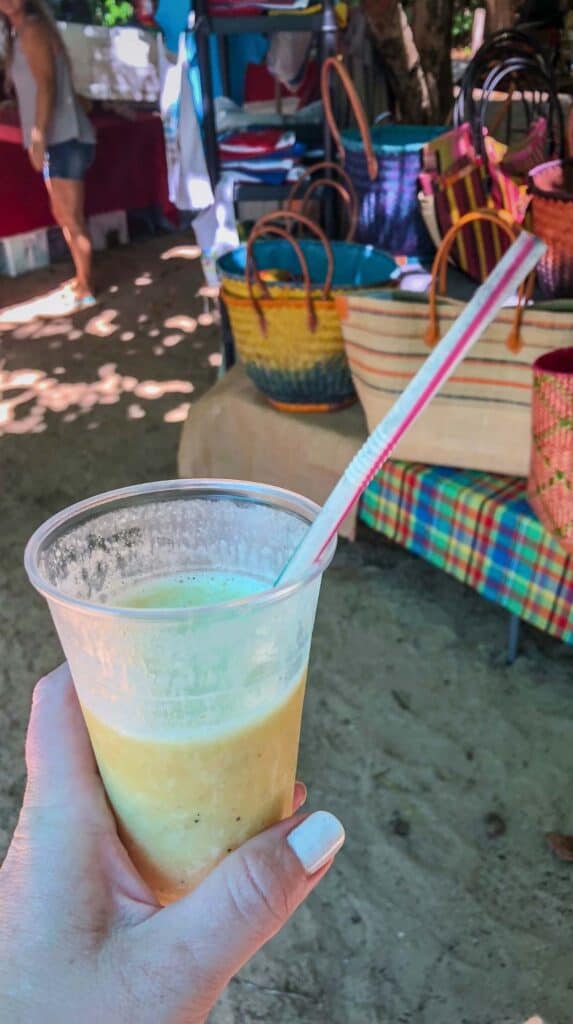
Martinique’s Rhum
When I told Jason that Martinique is 430 sq miles and has over 14 rum distilleries, he was in. We booked the trip that weekend.
What makes Martinique’s rhum different from every other Caribbean rum is what it doesn’t have: molasses. While most Caribbean rum is made from the byproduct left over after processing sugarcane into sugar, Martinique’s rhum agricole is made directly from fresh pressed cane juice.
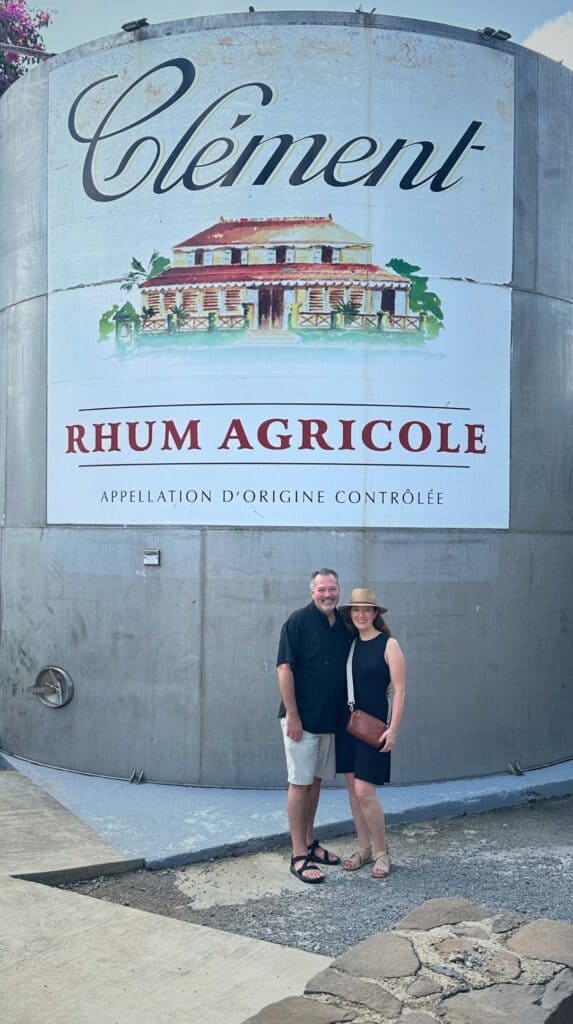
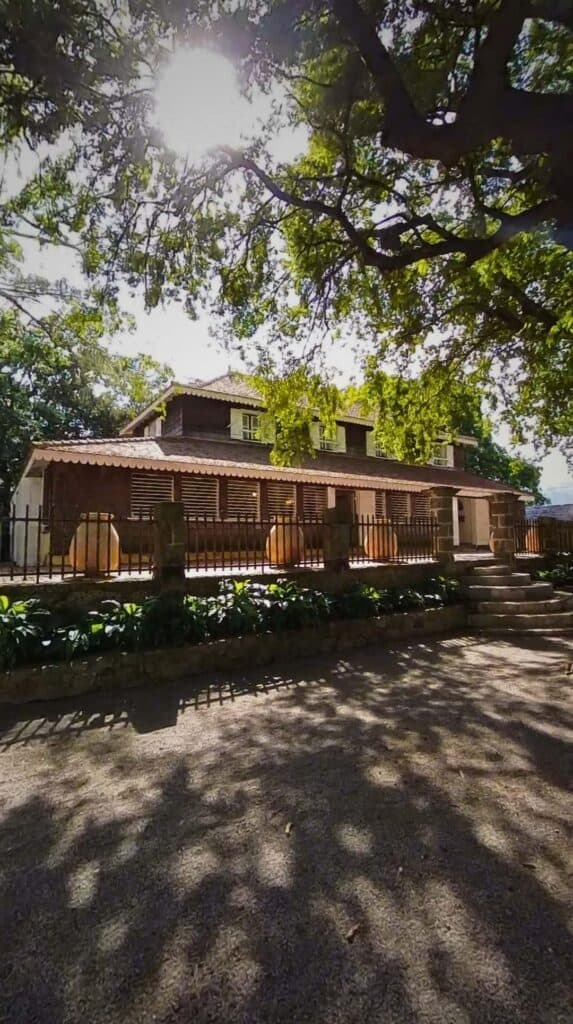
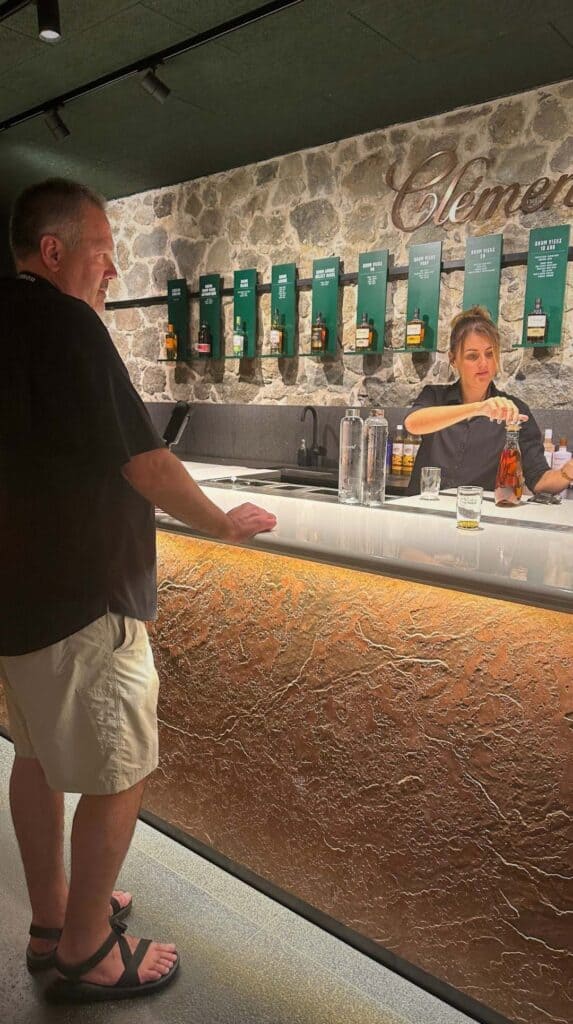
The flavor of Martinique’s rhum comes from the land itself, the same way a great wine reflects its vineyard. The soil, the climate, the hillside where the cane grew all affect the flavor. France recognized that distinction with an AOC certification, the same designation reserved for Champagne and Bordeaux.
If visiting a distillery or two isn’t already on your Martinique itinerary, it should be. Our guide to Martinique’s rum distilleries has everything you need to plan your visits.
🥃 Rum vs. Rhum: What’s the Difference?
It’s not a typo. “Rhum” is the spelling, used specifically for rum produced in the French Caribbean. When you see it spelled with an h, you’re looking at rhum agricole, made from fresh sugarcane juice, AOC certified, and produced under strict French regulations. “Rum” without the h is the generic term for everything else.
Things to Do in Martinique
Two trips in and we’ve barely scratched the surface. Here’s what made the list.
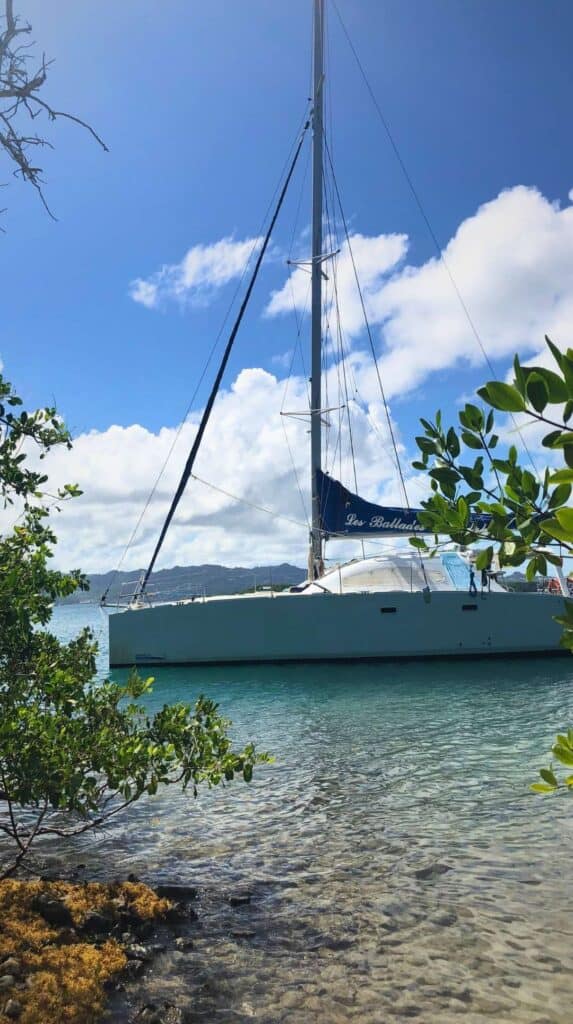
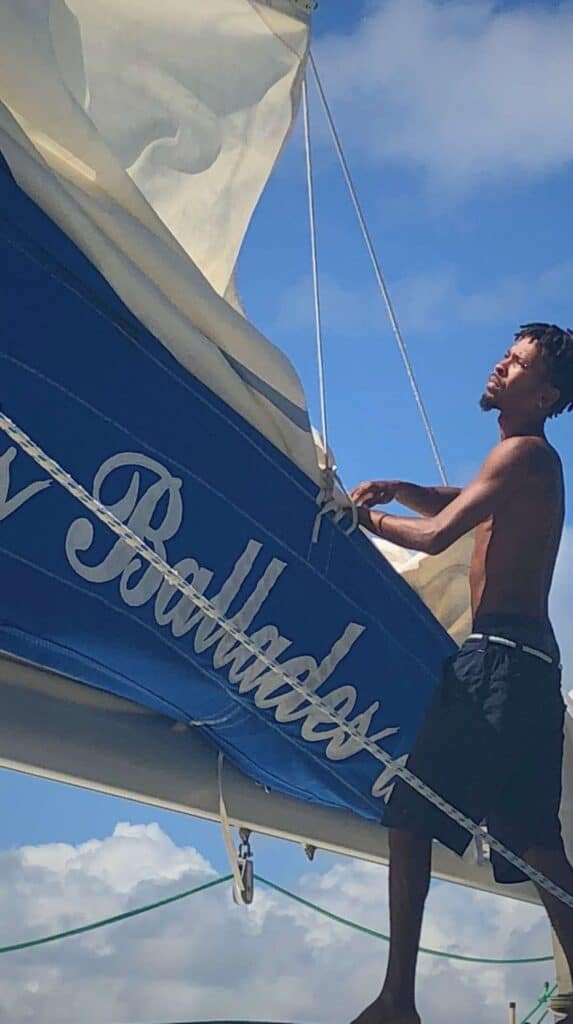
- A day on the Ballades du Delphis: This catamaran tour along the east coast comes with stunning scenery and unlimited Ti Punch. It was one of the best days we’ve ever had anywhere.
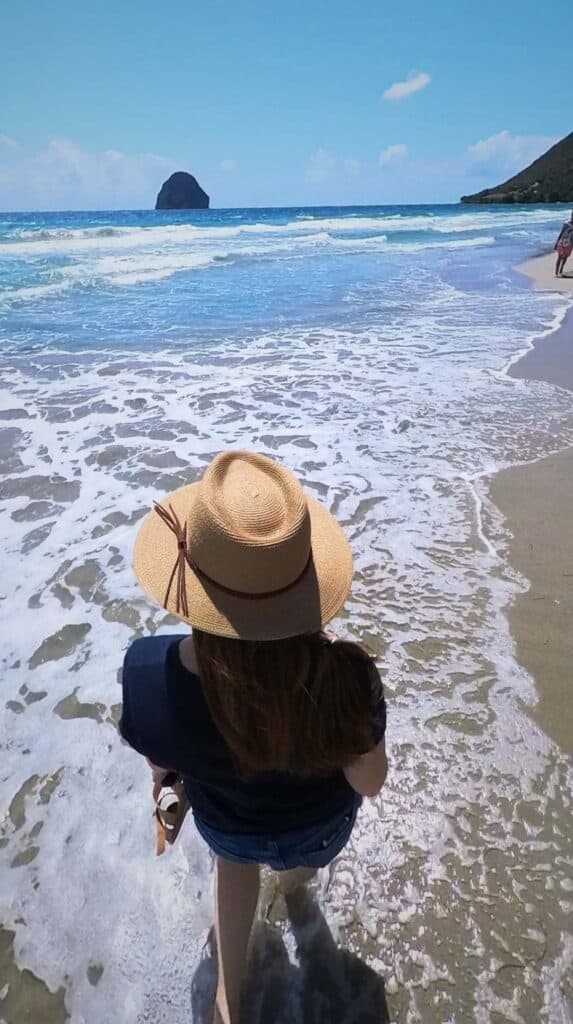
- The beaches: From white sand in the south to dramatic black sand in the north.
- The rum distilleries: We visited several across our two trips and every one was worth it.
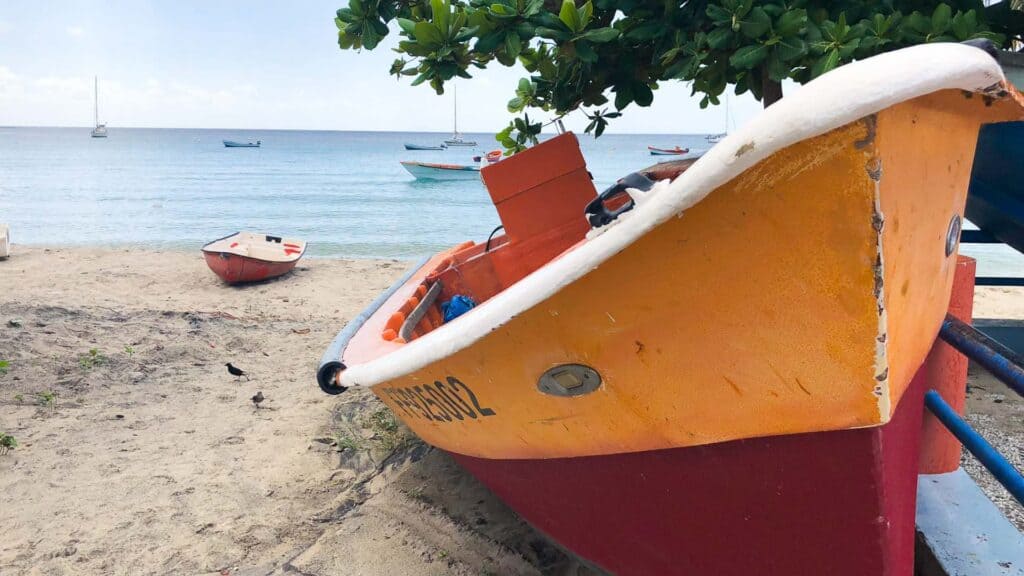
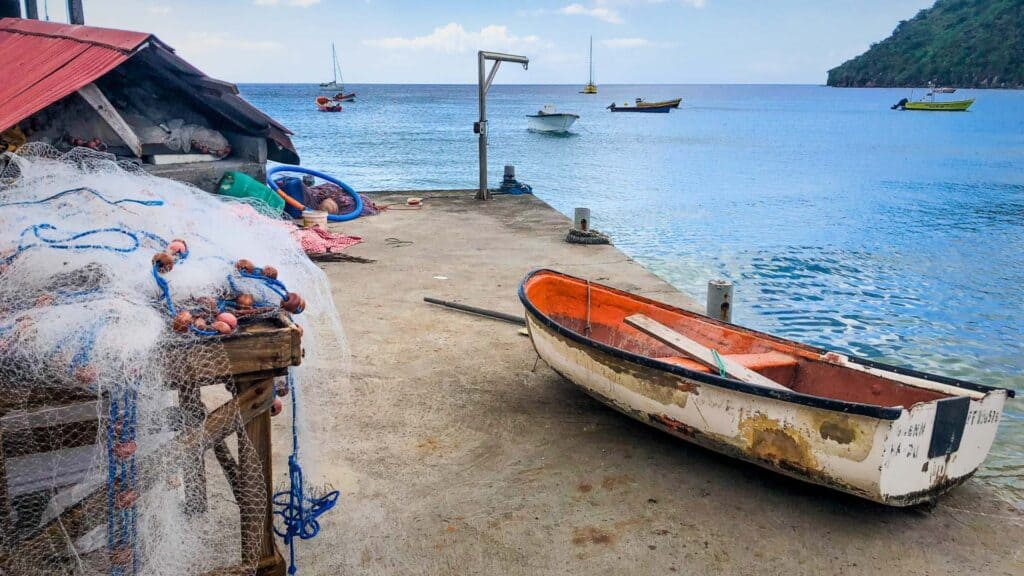
- The fishing villages: These small villages are unhurried and completely authentic. This is where you get a feel for the real Martinique.
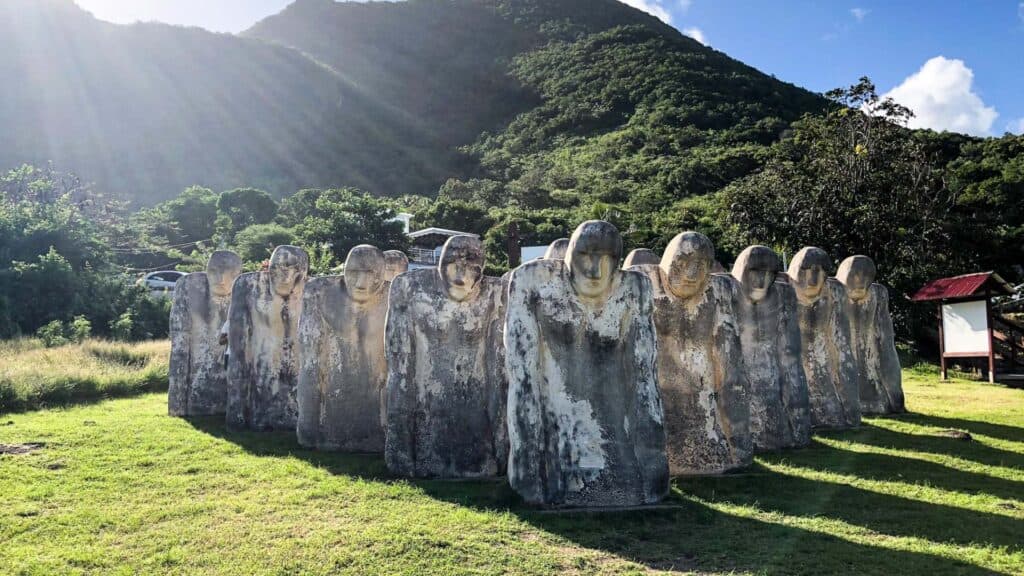
- Saint-Pierre and the Museum of the Catastrophe: The city was destroyed by Mount Pelée in 1902 and the ruins are still there. It was equally beautiful and haunting.
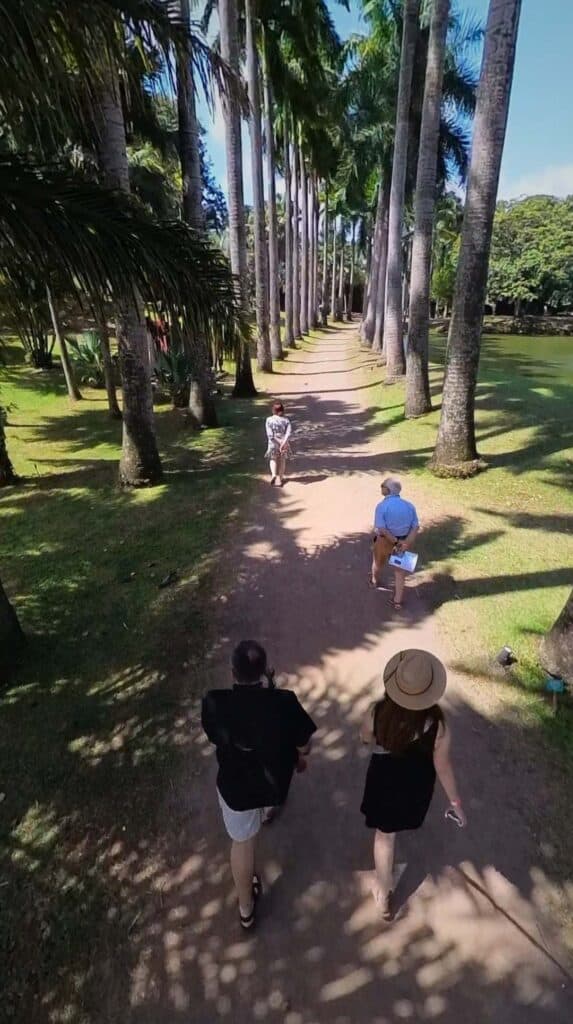
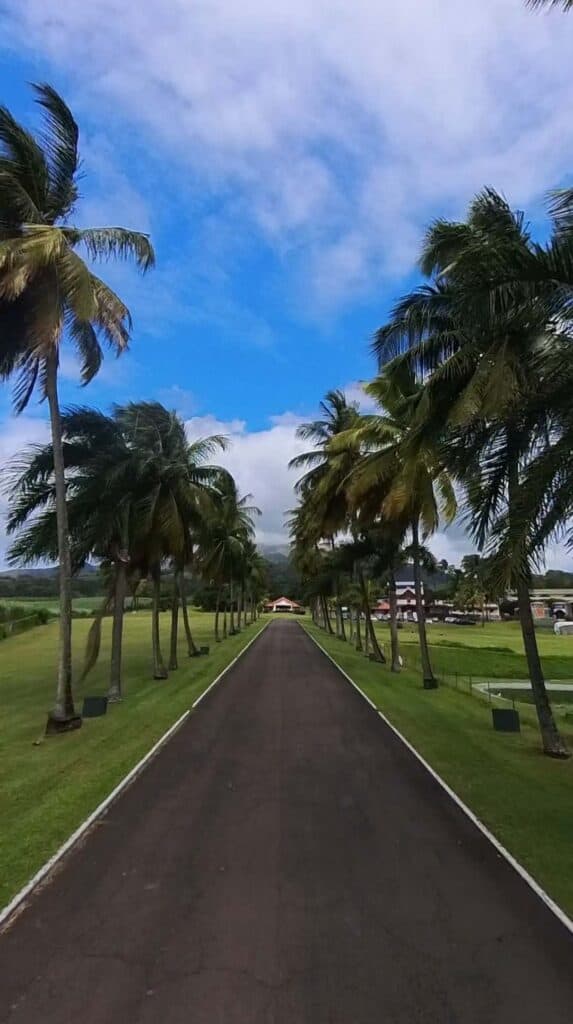
- Drive the island: From north to south the landscapes change completely. Set aside a full day and just drive.

How Long Should You Stay in Martinique
We did five days on our first trip and seven on our second. Five days wasn’t enough. We left with a list of things we didn’t get to. Seven days was better, but honestly we could have stayed longer.
Plan for at least five to seven days. That gives you time to explore the north and south, spend a day or two on the beach, visit a distillery, drive the island, and actually settle into the slower pace of the Caribbean.
Planning Your Trip to Martinique
When we planned our first trip to Martinique, finding good information as an American was nearly impossible. Most travelers to the island are French. English language guides were sparse, and the few that existed didn’t answer the questions we actually had.
That’s exactly why we built this cluster of posts. Here’s where to go next.
If you haven’t figured out where to stay in Martinique, that decision shapes everything else about your trip. Our guide breaks down the north vs. south question and gives you our specific recommendations.
For guided experiences, The Best Martinique Tours covers the ones worth booking, including how to make the most of a single day if you’re arriving by cruise ship.
Considering Les Cayalines? Our full review of the hotel has everything you need to know before you book.
And before you go, learn how to make the island’s two official flavors at home with How to Make Ti Punch and Accras de Morue. Because once you’ve had them in Martinique, you’ll want to have them back home.
FAQs About Martinique
Planning a trip to Martinique
See More Martinique Travel Guides
plan better trips
The Ultimate Planner to Maximize Your Weekend Getaways (Its Yours FREE!)
This is the exact planner we use to plan all our weekend getaways, from staycations to luxury resort weekends!